Helping Preschoolers Adjust: Playful and Gentle Drop-Off Practices in Philadelphia
Quick Answer
Drop-off gets easier when it feels predictable and warm — not rushed. At The Giving Tree, we use play-based routines that help children transition into their morning with confidence rather than worry. If you’re looking for a preschool in Philadelphia, Pennsylvania where goodbyes feel gentle and your child settles in happily, here’s exactly what that looks like in our classrooms.
What Drop-Off Really Feels Like for Your Child
You’ve probably stood at the classroom door longer than you planned to, watching to see whether your child would stop crying before you reached the parking lot. Or maybe your child runs in without looking back — and you’re the one who needs a minute. Either way, the moment of separation at the start of the school day is something almost every family works through, and it rarely looks the same from one child to the next.
If you’ve been looking at play-based preschool programs in Philadelphia, you’ve probably noticed that schools talk about drop-off differently. Some focus on the schedule; others focus on the child. Knowing what to look for helps you find a place where your child’s adjustment feels supported — not just managed.
There’s a reason drop-off feels hard for some children, and it has nothing to do with how ready they are for school. The research backs this up: NAEYC notes that separation anxiety is a normal part of development, and the way a program responds in those first few minutes has a real effect on how quickly and comfortably a child settles into their day. At The Giving Tree, we’ve built our morning routines around that understanding.
How We Use Play to Make Arrival Feel Safe
The most reliable anchor we can offer a child at arrival is an engaging activity to move toward. When a child steps into our classroom and sees a sensory bin rich with texture, a block tower waiting for new ideas, or an open invitation to create, they naturally step forward with curiosity.
Our teachers intentionally design these arrival invitations every morning. Rather than distracting children from their emotions, we offer a gentle transition through hands-on play. A child scooping kinetic sand or arranging wooden figures is actively building emotional regulation while feeling right at home.
Families often tell us they notice the difference after just a few weeks. The child who needed five minutes of reassurance at the door gradually needs three, then one, then walks in and waves goodbye without breaking stride.
The Power of a Consistent Goodbye Ritual
One thing that helps more than almost anything else is having a goodbye that feels the same every morning. Children this age are working hard to make sense of their world, and repetition is one of the primary ways they build confidence and trust. A goodbye that changes every day — sometimes a quick hug, sometimes five minutes of negotiating at the door, sometimes a parent who slips away quietly — keeps the child guessing and makes the anxiety harder to move through.
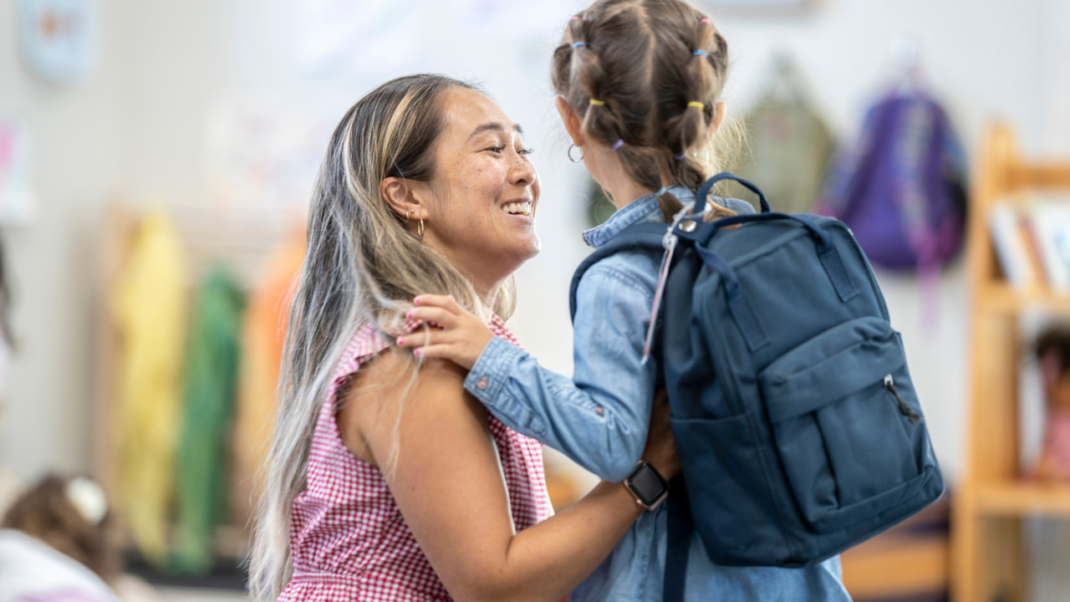
We work with families at The Giving Tree to build a short, consistent goodbye routine that fits their child. It might be three hugs and a high-five. It might be pressing a hand to the window as a parent walks to the car. It might be a special phrase they say together every single morning. What matters is that the child can see it coming, knows what it looks like, and learns over time that it always ends with them being safe and happy in their classroom.
NAEYC’s research on supporting morning transitions reinforces this directly: predictable, brief goodbye rituals give children the anchor they need to move from “I’m unsure” to “I can do this.” We see that shift happen regularly in our classrooms, and it usually takes less time than families expect.
What Happens After You Leave
The moments right after a family says goodbye are the ones that shape the rest of the morning. For most children, the tricky part isn’t the classroom itself — it’s the threshold between leaving you and finding their footing on the other side of it. Quality play-based programs understand this, and the best ones are designed to make that crossing as short and comfortable as possible.
What that looks like in practice varies from school to school and classroom to classroom. What stays consistent is the principle: children need something to move toward, an educator nearby who is warm and present, and just enough time to find their rhythm before the morning fully begins. Whether that’s a favorite activity waiting at their spot, a quiet moment with a book, or simply a familiar face that greets them by name — the goal is the same. Your child crosses that threshold and starts to feel like themselves again.
A good play-based morning doesn’t rush past that transition. It’s built around it. By the time the full group comes together, most children have already settled — not because the hard feeling was erased, but because they were gently given a path through it.
What Families Can Do at Home to Help
A smooth drop-off starts before the car even pulls into the parking lot. Children who know what to expect — who’ve heard “we’ll do our three hugs at the door and then I’ll go to work” on the drive over — arrive with a mental map of what’s about to happen. That predictability is a small gift that makes a real difference.
A few things that help at home:
- Talk about school in a matter-of-fact, warm way — not by asking whether they’re nervous, but by mentioning something specific they might do that day
- Keep your own goodbye calm and confident, even when it feels hard
- Avoid lingering past the goodbye ritual once it’s done — a clean ending is kinder than a slow one
- Celebrate the small wins out loud: “You walked right in today and I was so proud to watch that”
We share these kinds of practical tips with families regularly through our newsletters and at parent conversations, because the drop-off experience is something we work through together — not something we expect families to figure out on their own.
Frequently Asked Questions
How long does drop-off anxiety usually last for preschoolers?
Most children settle into their morning routine within two to four weeks, though every child moves at their own pace. Consistency from both home and school makes the biggest difference in how quickly that shift happens.
Should I stay longer at drop-off if my child is upset?
A warm, brief goodbye usually works better than a long one. Staying longer can signal to your child that there’s something to be worried about. Your child’s teachers are there to step in and redirect as soon as you’ve said goodbye — trust them to take it from there.
What if my child cries every morning even after several weeks?
If drop-off feels hard past the first month, that’s a great conversation to have with your child’s educator. There might be something small that can be adjusted — the arrival activity, the timing, the goodbye ritual — that makes a real difference. Don’t hesitate to bring it up.
What happens if a child is still upset after a parent leaves?
Teachers stay close and gently guide children toward something engaging — a preferred activity, a favorite book, or a small task that helps them feel capable. Families are always welcome to ask how the morning went, and good programs make it easy to stay in the loop.
Adjustments take time, and some mornings will be smoother than others. What matters most is that your child is walking into a space where the people waiting for them already know what helps — and are ready to meet them exactly where they are.
Come see our morning in action
Families in Philadelphia choose The Giving Tree because they see how a warm, play-based morning routine gives children the confidence to step in and thrive. We would love to show you what that looks like in person.
Schedule a tour at The Giving Tree in Philadelphia, Pennsylvania and meet the teachers who make drop-off feel like the beginning of something great.
Related Posts
All Posts
Helping Preschoolers Adjust: Playful and Gentle Drop-Off Practices in Philadelphia, PA
The Play-Based Approach to Potty Learning: Tips for Families in Philadelphia, PA